
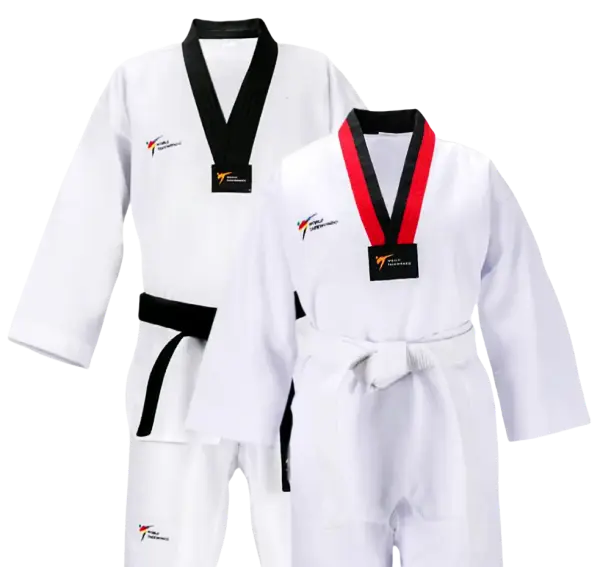
As a taekwondo practitioner, coach, or dojo owner, you’ve probably faced this dilemma: standing in front of a rack of gear, wondering if a WT uniform will work for your ITF pattern practice, or if ITF protective gear meets WT competition standards. The wrong choice isn’t just a waste of money—it can slow your training, compromise safety, or even get you disqualified from tournaments.
First, let’s clarify the two styles to set the stage. WT (World Taekwondo) is the Olympic-recognized federation, focused on sporty, fast-paced competition (think high kicks and electronic scoring). ITF (International Taekwon-Do Federation), by contrast, emphasizes traditional techniques and deliberate forms (called “patterns” or “poomsae”). These differences trickle down to every piece of gear—and understanding them is key to making the right pick. Below, we break down the critical distinctions, plus how SINOBUDO’s gear caters to both styles.
Taekwondo Uniforms: The Most Visible Divide
Your uniform isn’t just a uniform—it’s a reflection of your taekwondo style. WT and ITF uniforms differ in cut, fabric, and design, all tailored to their unique training and competition needs.
- Cut & Fit
WT uniforms are built for speed. They feature a slim, aerodynamic cut that minimizes drag during fast kicks (like the roundhouse or back kick) common in WT sparring. Jacket sleeves hit just above the wrist, and pant legs end at the mid-calf—no extra fabric to get in the way of quick movements. For competitors, this streamlined fit isn’t just a preference; it’s often a requirement to meet WT’s competition rules.
ITF uniforms, by contrast, have a relaxed, traditional cut. The jacket is longer (hitting mid-thigh) with wider sleeves, and the pants have a looser fit—perfect for the slow, deliberate motions of ITF patterns. This roomier design lets practitioners fully extend their arms and legs during forms without feeling restricted, which is crucial for mastering technical precision. - Fabric
WT uniforms prioritize breathability and lightness. Most are made from a 65/35 poly-cotton blend—light enough to keep you cool during 20-minute sparring rounds, but durable enough to withstand repeated washes. Many also include a touch of spandex (5-10%) for subtle stretch, so you can move without the fabric pulling.
ITF uniforms lean into durability. They’re typically crafted from heavyweight cotton (8-10 oz per square yard) that stands up to years of pattern practice. Unlike lighter blends, heavyweight cotton retains its shape even after dozens of washes, and it’s thick enough to resist tearing during partner drills. For traditionalists, the weight and feel of cotton also add a sense of authenticity to training. - Design Details
WT uniforms keep it simple. Competition-approved styles have minimal branding—often just a small WT logo or no logo at all—and follow strict rules: V-necks or round necks are standard, and excessive embroidery (like school names) is forbidden. The focus is on uniformity, so all competitors look cohesive in the ring.
ITF uniforms embrace tradition. They feature a classic fold-over collar (similar to traditional martial arts uniforms) and often allow custom embroidery—many dojos add their logo to the chest or sleeve. Stress points (like shoulders and cuffs) also have reinforced stitching, since ITF training involves more grabbing and pulling than WT sparring.
SINOBUDO’s Take
We design uniforms specifically for both styles: Our WT competition uniforms are fully WT-certified (meeting all Olympic-level standards) with a lightweight poly-cotton blend and slim cut. For ITF practitioners, we offer heavyweight cotton uniforms with reinforced stitching and optional custom embroidery—perfect for dojos or traditional training.